
The main factor boosting production was a sustained rise in new work inflows.

Raghuram Rajan rejected the argument that inflation has come down largely because of "good luck" stemming from low oil prices.
The regulator said that it is vested within its purview to regulate the bank account for payment systems and the settlement systems are finally posted in the books of account of banks with the RBI to attain settlement finality.

Common use products like hair oil, soaps and toothpaste will be charged with a single national sales tax or GST of 18 per cent instead of present 22-24 per cent

The Reserve Bank of India unexpectedly raised its policy interest rate on Tuesday by 25 basis points (bps) but said that if consumer price inflation eases as projected, it does not foresee further near-term tightening.

For banks to cut loan rates, the cost of deposits needs to come down, and there is no sign of that happening.

The RBI governor-designate may be economical with spoken words, but is known for his sharp and critical writings

There is nothing wrong with government and RBI having conflicting opinions.
Banks normally park almost 27 per cent of their funds in government securitie.
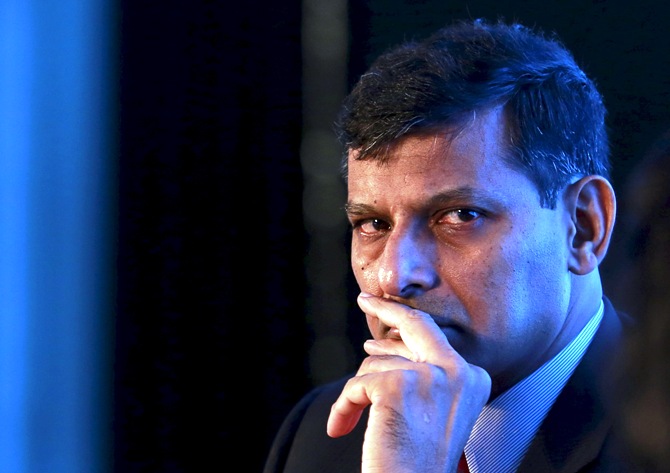
We need a change in mindset, says the RBI Governor.

'The assumed linear correlation between forced lower yields, higher bank borrowing from the RBI, higher lending, and higher growth involves leaps of faith, each a step on the quicksand of false beliefs,' warns Debashis Basu.

Central bank sees action as discriminatory, unfair
It is time for the three finance ministers of the 1990s to reveal the real hero, says T C A Srinavasa-Raghavan.

Top gainers in the Sensex pack included Yes Bank, TechM, Bajaj Finance, Bharti Airtel, Maruti, Asian Paints and Hero MotoCorp - rising up to 5.30 per cent. The 50-share Nifty ended 85.65 points, or 0.79 per cent, higher at 10,948.25 points.

Delivering a public speech hours after the RBI launched a rescue act for Yes Bank on March 6, Governor Shaktikanta Das reiterated the RBI's affirmation to do whatever was needed to combat the coronavirus impact. On that day, India had only one confirmed COVID-19 infection, the World Health Organisation was five days off from declaring it as a pandemic and the financially debilitating lockdowns were not even on the horizon. Das' promise on efforts to mitigate COVID-19 impact appeared as a footnote in news reports from the event.

Rajan also did his bit by taking steps to protect the currency against speculative attack as did the government in curbing gold imports and bringing the Current Account Deficit
Growth impulses, while improving, remain fragile, and a rate hike will be disruptive to interest costs.

Banks have raised concerns over the new international trade settlement in rupee, fearing that facilitation of such a mechanism could result in them facing the ire of economic sanctions by the West, people aware of the matter said. Large banks with overseas operations have sought clarity and assurance from the Reserve Bank of India (RBI) that they will not be targeted with sanctions for facilitating rupee trade with a sanction-hit country such as Russia. The present payment mechanism is a shift from earlier such arrangements, like the one with sanction-hit Iran, which involved banks facilitating settlement of international trade that did not have business in the sanctioned nation.

"Unlike in UP, the governments of Punjab and Rajasthan are not denying that the girl was raped, threatening her family and blocking the course of justice. If they do, I will go there to fight for justice," he tweeted.

If indeed we want the board to manage the RBI, probably the government should take a close look at the US Federal Reserve system which has a two-part structure - a central authority in Washington, DC, and a decentralised network of 12 Federal Reserve Banks located throughout the country, says Tamal Bandyopadhyay.

Wednesday's was the first MPC meeting that had a dissent note.
RBI conducts interviews for first lateral hire for CGM post; deputy governors to head four distinct verticals.

'There will be no serious effect on Indian economy because one person, one man, however powerful, however influential, however great, cannot have an impact on an economy as big and complex as India.'

RBI will take a cue from the Fed policy statement.

The size of the Reserve Bank's balance sheet, which is reflective of activities carried out by it in pursuance of currency issue function as well as monetary policy and reserve management, has increased by 6.99 per cent during the nine-month period ended March 31, 2021. While income for the year decreased by 10.96 per cent, the expenditure decreased by 63.10 per cent, as per the RBI's Annual Report for 2020-21. The year ended with an overall surplus of Rs 99,122 crore as against Rs 57,127.53 crore in the previous year, representing an increase of 73.51 per cent, it added.

Mortgage lender HDFC Ltd on Wednesday announced an increase in its benchmark lending rate by 5 basis points (bps), a move that will make loans dearer for both existing and new borrowers. This is the third hike effected by HDFC in the last one month. "HDFC increases its Retail Prime Lending Rate (RPLR) on housing loans, on which its Adjustable Rate Home Loans (ARHL) are benchmarked, by 5 basis points, with effect from June 1, 2022," the housing finance company said in a statement.

In his book, former governor Subbarao says Chidambaram, Pranab were piqued by his tight rate policy.

The central bank tweaked the retail inflation range to 4.8-4.9 per cent in the first half of 2018-19, and 4.7 per cent in the second half.

The wholesale price-based inflation accelerated to a record high of 12.94 per cent in May, on rising prices of crude oil and manufactured goods. Low base effect also contributed to the spike in WPI inflation in May 2021. In May 2020, WPI inflation was at (-) 3.37 per cent. This is the fifth straight month of uptick seen in the wholesale price index (WPI)-based inflation. In April, 2021, WPI inflation hit double digit at 10.49 per cent. "The annual rate of inflation, based on monthly WPI, was 12.94 per cent for the month of May, 2021 (over May, 2020) as compared to (-) 3.37 per cent in May 2020.

Analysts are expecting inflation to fall further in October and November on base effect. Inflation measured by consumer prices has been trending down for over four months, and came in at 6.7 per cent in September.

Services sector activities improved further and touched a five-month high in April driven by a surge in incoming new work orders that boosted business activity and supported a renewed increase in employment, according to a survey. The seasonally adjusted S&P Global India Services PMI Business Activity Index jumped to 57.9 in April, from 53.6 in March, highlighting a sharp rate of expansion that was the fastest since last November amid mounting price pressures. For the ninth straight month, the services sector witnessed an expansion in output.
.jpg)
Bankers remained ambivalent on the impact of Tuesday's policy announcement by Reserve Bank on the cost of funds and refrained from giving a guidance on the direction in which lending rates are headed.

Watal panel had suggested an independent payments regulator be set up.

He said the short term macroeconomic priorities of the RBI continue to focus on bringing down inflation towards the government-set target of 4 per cent

'We are very watchful about inflation and growth. But the main challenge is economic revival and growth.'

India needs foreign exchange buffer reserves to insulate itself from exchange rate volatility as we have "no friends" for swap lines and Japan was the only country that helped during the taper tantrum in 2013, former RBI Governor Raghuram Rajan said on Tuesday. Participating in a virtual event organised by economic think tank NCAER, Rajan said during the taper tantrum in 2013, India asked for swap lines, and only country who helped was Japan. "We need this (foreign exchange) reserve buffer to insulate ourselves because we have no friends.

The Nikkei Markit India Manufacturing Purchasing Managers' Index (PMI) -- a gauge of manufacturing performance -- fell to 52.3, down from October's 22-month high of 54.4.

The finance ministry on Thursday raised concerns over the possible impact of El Nio conditions on India this year, saying if recent forecasts came true, the country could see lower agricultural output and higher inflation. "Some meteorological agencies predict the return of El Nio conditions in India this year. "If these predictions are accurate, then monsoon rains could be deficient, leading to lower agricultural output and higher prices," the ministry said in its monthly economic review.

India's services sector activity witnessed a sharp upturn in August on the back of stronger gains in new business, ongoing improvements in demand conditions and job creation, a monthly survey said on Monday. The seasonally adjusted S&P Global India Services PMI Business Activity Index rose from July's four-month low of 55.5 to 57.2 in August, amid a quicker upturn in business activity and the sharpest rise in employment for over 14 years. For the thirteenth straight month, the services sector witnessed an expansion in output.

"I am an academic and I have always made it clear that my ultimate home is in the realm of ideas," Rajan said in a letter to staff.
